
Mindful Eating: Transform Your Relationship with Food

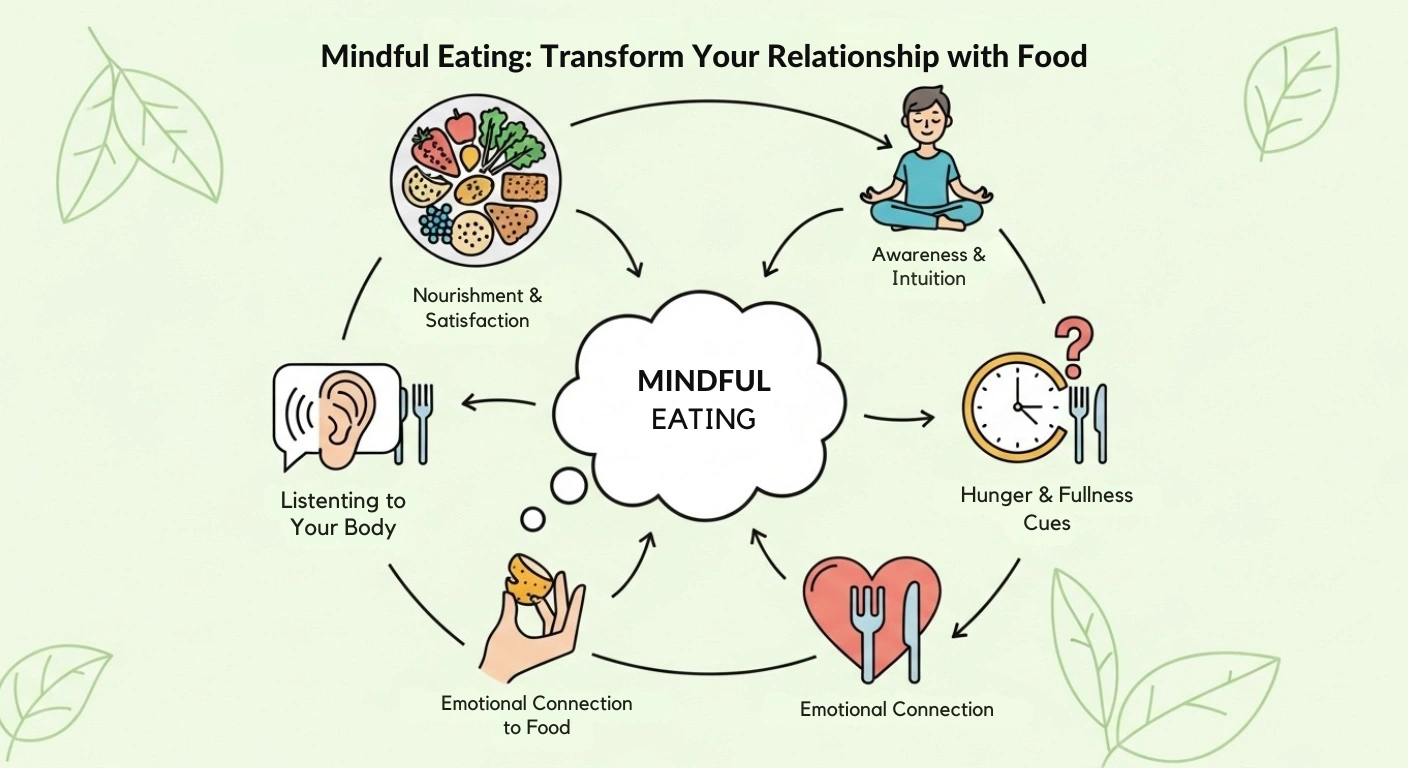
Have you ever eaten a meal without fully tasting it? In today’s fast-paced world, eating is often done on autopilot, whether we’re working, driving, or watching TV. But what if eating could be more than just a necessity? What if it could be a practice that nourishes both your body and mind? Mindful eating can transform your relationship with food and help you enjoy meals with intention, awareness, and joy.
What Exactly Is Mindful Eating?
Mindful eating is all about being fully present while eating. It’s about paying attention to the colors, smells, textures, and flavors of the food, as well as how it makes your body feel. Mindful eating encourages you to notice hunger and fullness cues, enjoy each bite, and appreciate the experience. Instead of mindlessly consuming food, you focus on the moment and connect with your body’s true needs.
Why Mindful Eating Matters
Mindful eating can have numerous benefits, both for your physical and emotional well-being. By eating mindfully, you can:
- Improve digestion by chewing food properly.
- Help manage weight by recognizing hunger and fullness cues.
- Reduce emotional eating by distinguishing between physical and emotional hunger.
- Increase enjoyment of food by savoring each bite.
- Foster a healthier relationship with food by eating without guilt or shame.
Mindful eating offers a balanced, sustainable approach to eating that goes beyond dieting.
Pre-Meal Mindful Intention & Gratitude
Before you begin eating, take a moment to check in with yourself. Are you truly hungry, or are you eating for another reason, such as boredom or stress? Setting an intention and practicing gratitude before meals helps you approach food with mindfulness.
- Pause and ask yourself why you’re eating.
- Set an intention for how you want to feel after eating.
- Express gratitude for the food in front of you, the hands that prepared it, and the nourishment it provides.
This small practice helps ground you and sets a positive tone for the meal.
Mindful Meal Planning & Shopping
Mindful eating doesn’t just happen at the table; it starts in the planning stages. Mindful meal planning and shopping help you make intentional food choices.
- Plan meals that nourish your body, focusing on whole foods.
- Shop mindfully by paying attention to the colors, textures, and smells of the foods.
- Reflect on how the foods you buy will make you feel after eating them.
Mindful meal planning helps you avoid impulse buying and create meals that support your long-term health & wellness.
Slow Down & Engage Your Senses
Eating slowly is a key component of mindful eating. By taking your time and engaging your senses, you can fully appreciate the food you’re eating.
- Notice the colors, textures, and aromas of your food.
- Chew each bite thoroughly and savor the flavors.
- Pay attention to how your body feels as you eat are you full yet, or do you need more.
Slowing down not only enhances your eating experience but also helps prevent overeating.
Honor Hunger and Fullness Cues
Mindful eating involves listening to your body’s natural hunger signals. Before you start eating, rate your hunger on a scale from 0 (starving) to 10 (overly full). Aim to eat when you’re around a 3–4 and stop when you’re at a 6–7.
- Check in with your hunger before eating: Are you truly hungry, or just bored or stressed?
- Stop eating when you’re comfortably full, not stuffed.
This practice helps you avoid overeating and lets your body guide your eating habits.
Notice Emotional vs. Physical Hunger
Emotional eating is a common challenge for many people. Mindful eating encourages you to distinguish between emotional and physical hunger.
- Emotional hunger often leads to cravings for comfort food and a sense of urgency to eat.
- Physical hunger comes gradually and can be satisfied with any type of food.
Before eating, ask yourself: Am I eating because I’m truly hungry, or because I’m feeling stressed, bored, or emotional?
Eliminate Distractions
One of the simplest ways to eat mindfully is by eliminating distractions. Turn off the TV, put away your phone, and focus solely on your food.
- Set aside time to eat without multitasking.
- Create a calm, peaceful environment for your meals.
- Use this time to reconnect with your body and mind.
By removing distractions, you can be more present and focused on the food in front of you.
Social & Silent Eating Practices
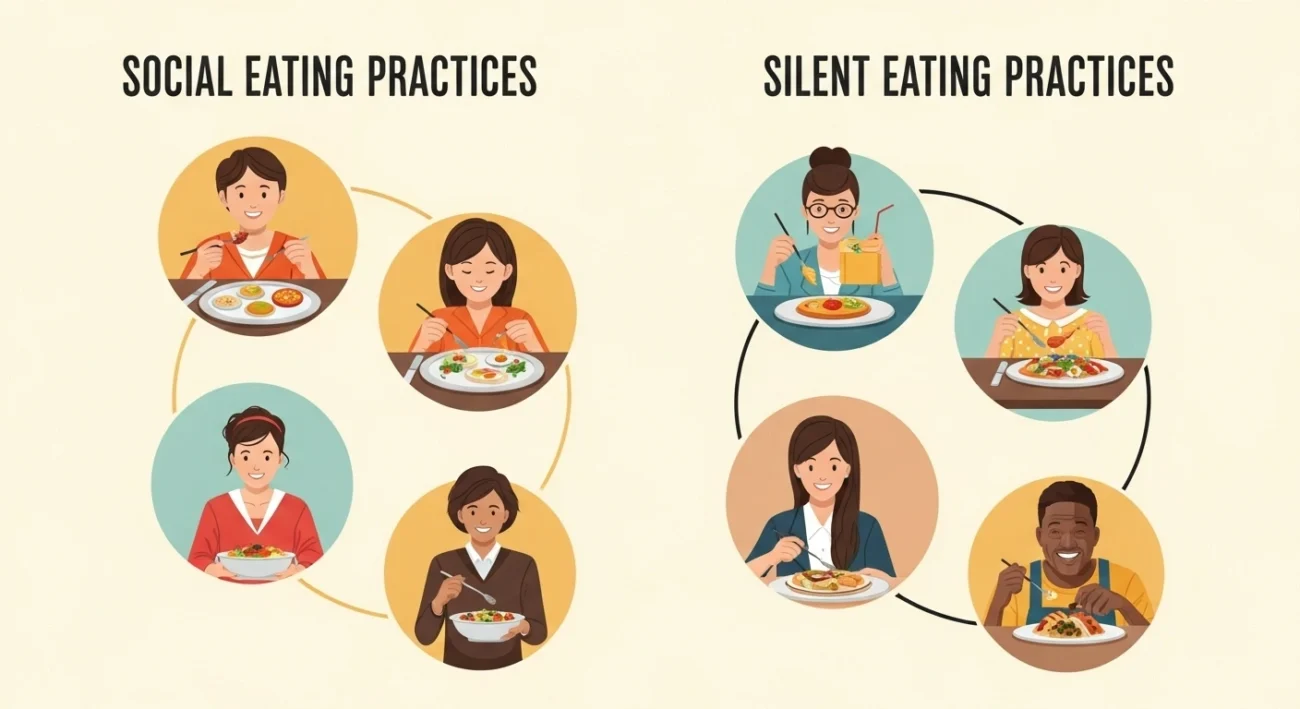
Eating with others can enhance the experience, but sometimes eating in silence can help you connect more deeply with your food. Both approaches have value, depending on the situation.
- Enjoy meals with others to foster connection and enjoyment.
- Practice eating silently once in a while to notice your thoughts and emotions around food.
Both social and silent eating can promote mindfulness, depending on your goals for the meal.
Appreciate Your Food’s Journey
Mindful eating is not just about the moment of consumption; it’s also about appreciating where your food comes from. Reflect on the journey your food has taken from farm to plate.
- Think about the people who grew, harvested, and prepared your food.
- Acknowledge the environmental impact of your food choices.
By appreciating the journey of your food, you deepen your connection to the food and your environment.
Final Thoughts
Mindful eating is not about perfection; it’s about being present. By slowing down, listening to your body, and engaging all your senses, you can transform your relationship with food. It’s about reconnecting with the joy of eating and nourishing your body with intention. Start small, and gradually, you’ll find that mindful eating becomes a natural part of your everyday life. So, the next time you sit down to a meal, take a deep breath, savor each bite, and enjoy the experience.