
Daily Habits That Transform Your Lifestyle

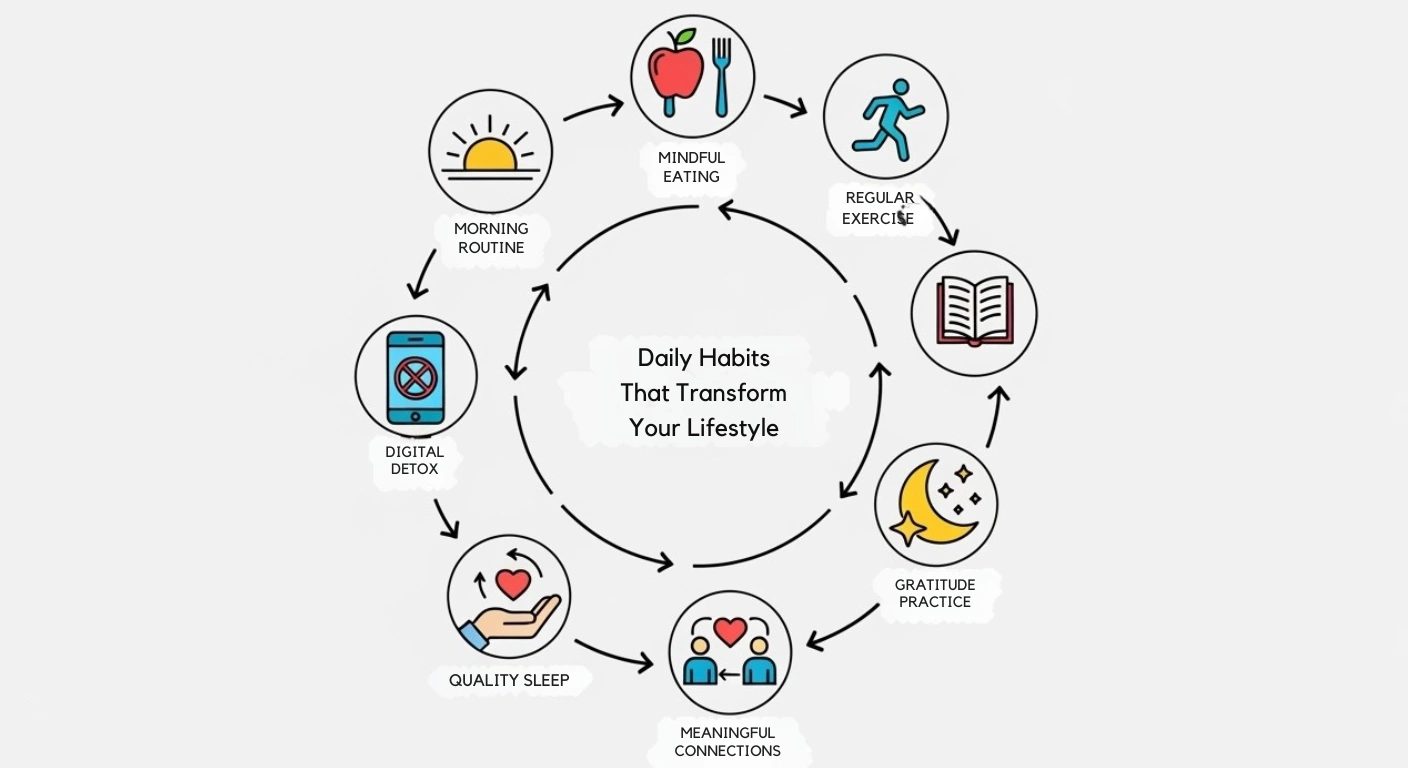
Have you ever wondered why some people move through their days with energy and purpose, while others can barely get out of bed in the morning. What comes down to is often something surprisingly simple: their daily habits.
Change doesn’t unfold in big, sudden bursts. It occurs in the small, repeated decisions you make every single day. In 2026, we’re no longer pursuing perfect habits. We are pursuing habits that are sustainable and ones that will feel achievable for real life.
| Habit Category | Time Required | Key Benefit | Difficulty Level |
|---|---|---|---|
| Morning Routine | 30-60 minutes | Sets daily tone, reduces stress | Easy to Moderate |
| Hydration Practice | 2 minutes | Boosts energy, improves focus | Very Easy |
| Movement Breaks | 10-15 minutes | Reduces mortality risk, clears mind | Easy |
| Habit Stacking | Variable | 64% higher success rate | Moderate |
| Digital Detox | 1 hour daily | Reduces anxiety by 16%, depression by 25% | Moderate to Hard |
| Sleep Hygiene | 7-9 hours | Improves all health markers | Moderate |
| Gratitude Practice | 5 minutes | Increases long-term optimism | Very Easy |
| Deep Work Blocks | 2-4 hours | Boosts productivity by 20% | Moderate |
Why Small Habits Beat Big Resolutions Every Time
There’s research, in fact, that shows fewer than 10% of people hold onto their resolutions for the entire year; a quarter give up in just the first week. Most people don’t stick to new year’s resolutions because they are solely dependent on willpower.
Habits work differently. When a behavior becomes habit, this mental energy is no longer needed to take action. Your brain carries it out automatically, so your attention is freed for other matters.
This is when keystone habits turn into incredibly potent keystone behaviors that serve as the driver for a chain of other succeeded, often unrelated, habits.
The Morning Routine Your Most Valuable Hours
How you spend the first hours of your day matters more than you might think. Research indicates that building a consistent morning routine can raise productivity by up to 20 percent while improving mood and decision-making.
A recent survey found that 90 percent of Americans say their morning routine sets the tone for their mental wellness. Yet more than half spend less than thirty minutes on it, with 42 percent wasting their morning time scrolling social media.
Key Elements of an Effective Morning Routine:
- Wake at a consistent time daily to regulate your circadian rhythm
- Drink water before caffeine to rehydrate after sleep
- Move for 5-10 minutes through stretching, yoga, or a brief walk
- Avoid your phone for the first hour you’re awake
- Set your top 3 priorities for the day ahead
Habit Stacking: The Secret Weapon for Lasting Change
A 2025 study found that habit stacking increased success rates by 64 percent compared to establishing standalone habits. This technique involves attaching a new habit to one you already do automatically.
The formula is simple: After [current habit], I will [new habit]. When a new behavior consistently follows an established habit, your brain links the two and eventually treats them as a single unit.
Habit Stacking Examples That Work:
- After brushing teeth → do 2 minutes of stretching
- After pouring morning coffee → write down 3 daily priorities
- After sitting at your desk → take 3 deep breaths before opening email
- After using the bathroom → drink a full glass of water
- After making your bed → do a quick body scan meditation
Studies show that executives with structured morning habit stacks report 43 percent higher productivity and 37 percent better stress management.
The Digital Detox Your Brain Is Craving
Research published in JAMA Network Open found that young adults who participated in a one-week social media detox experienced remarkable improvements. Anxiety symptoms dropped by 16.1 percent, depression decreased by 24.8 percent, and insomnia improved by 14.5 percent.
Excessive social media use has been consistently linked to anxiety, sleep disturbances, and behaviors that worsen mental health concerns.
Practical Digital Detox Strategies:
- Maintain at least one hour of tech-free time before bed
- Designate bedrooms as phone-free zones at night
- Use a real alarm clock instead of your phone
- Replace some scrolling time with physical activity
- Turn off non-essential notifications
- Keep your phone in another room during focused work
The goal isn’t eliminating technology completely it’s managing it intentionally for your specific needs.
Movement: The Habit That Changes Everything
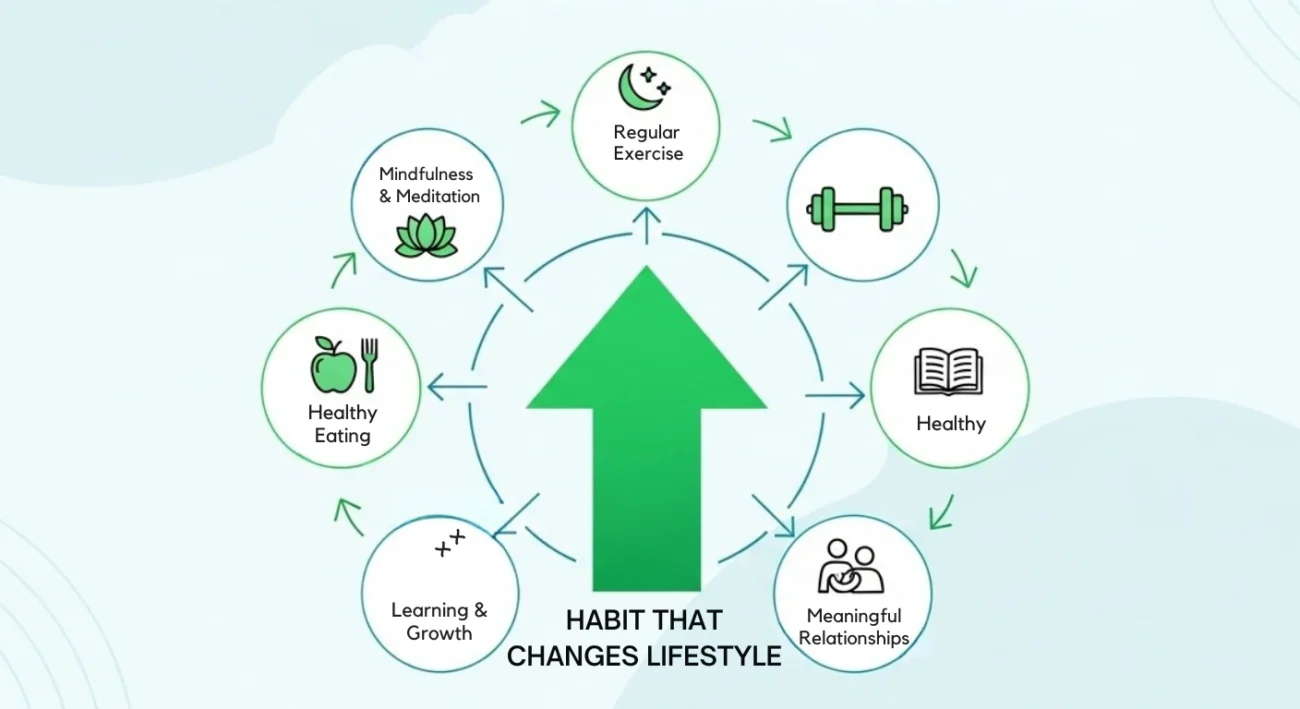
Research from the British Journal of Sports Medicine shows that just eleven minutes of physical activity per day can lower the risk of premature death. People who got seventy-five minutes of moderate activity per week had lower risks for heart disease, stroke, and several cancers.
Daily movement doesn’t need to be intense to be impactful. A walk, stretching while getting ready, or dancing while cooking all count.
Simple Ways to Add Movement:
- Take walking meetings when possible
- Stand while taking phone calls
- Park farther from entrances
- Take stairs instead of elevators
- Stretch during TV commercials
- Do desk exercises between tasks
- Walk around while listening to podcasts
Research shows that sitting eight or more hours daily increases mortality risk by 15 percent. Micro-movement breaks throughout your day reduce this risk substantially.
Sleep: The Foundation Everything Else Builds On
Adults should get between seven and nine hours of sleep nightly. People who consistently get less than seven hours have higher rates of obesity, diabetes, and cardiovascular disease by middle age.
Many people try sleeping five or six hours on weeknights and catching up on weekends. Research shows you can’t fully compensate for chronic sleep deprivation this way the effects compound over time.
Building Better Sleep Habits:
- Establish a consistent wake-up time, even on weekends
- Get morning light exposure to set your internal clock
- Create pre-bedtime rituals without screens
- Avoid alcohol and strenuous exercise before bed
- Keep your bedroom cool, dark, and quiet
- Reserve your bed for sleep only
Good sleep makes it easier to maintain all other daily habits that protect your long-term health.
The Power of Doing Less But Better
The path to transformation is often through subtraction, not addition. When you attempt to focus on five priorities, you get moderate progress on all of them. When you narrow in on three things that are most important, those are the areas where you become extraordinary.
Take a moment and consider what it is you might have to say no to in order to say yes to that which matters most. So every commitment is a commitment you’re not making to something else. Save your energy for the habits and goals that actually push your life forward.
Intentional Breathing: Two Minutes That Change Your State
A few minutes of intentional breathing every day can increase your ability to tolerate stress and maintain focused calm. Slow, controlled breathing with longer exhales activates your parasympathetic nervous system, helping your body de-escalate its stress response.
Simple Breathing Techniques:
- Box breathing: inhale 4 counts, hold 4, exhale 4, hold 4
- 4-7-8 breathing: inhale 4 counts, hold 7, exhale 8
- Extended exhale: inhale normally, exhale twice as long
Just two minutes of intentional breathing can shift your state from scattered to centered. This is a portable tool you can use anywhere—in stressful meetings, during commutes, or before difficult conversations.
Build Your Personal Habit System
The goal isn’t to copy someone else’s routine it’s to build a system that supports your specific brain, body, and goals.
Start by asking yourself what you need most right now. Better sleep? More energy? Less stress? Your answers shape what belongs in your routine.
Guidelines for Success:
- Start with just one habit, not five
- Give each habit 30 days before evaluating
- Track your progress in some simple way
- Never miss twice in a row
- Make good habits easy and bad habits hard
- Design your environment to support your goals
- Be patient habits take 66 days on average to become automatic
FAQs
How long does it really take to form a new habit?
Research indicates an average of sixty-six days, but this varies widely. Simple habits might stick within weeks, while complex behaviors could take months. The key is consistency, not perfection.
What if I’m not a morning person?
The principles apply to any time of day. The most important thing is consistency doing your habits at the same time daily helps your brain automate the behavior.
How many new habits should I try to build at once?
Start with one. Once that feels automatic (typically two to four weeks), add another. Trying to establish multiple new habits simultaneously usually results in failing at all of them.
What’s the best way to break a bad habit?
Focus on making the triggers invisible and replacing the behavior with something else. Create friction for bad habits and reduce friction for good ones.
Do these habits work for busy people with kids?
Yes, but they require adaptation. A parent might not have an hour for routines, but can still hydrate first thing, stretch for two minutes while kids eat breakfast, and practice gratitude during school drop-off.
What role does environment play?
Environment is crucial. Design your space to make good habits easy and bad habits hard. Put running shoes by the door, keep healthy snacks visible, and remove distracting apps from your phone’s home screen.
Final Thought
The person you will be next year is being forged by the choices you are making today. You don’t necessarily need a complete life overhaul: You need one small habit practiced consistently and to the point at which it becomes automatic, then another small habit on top of that, and then another. That’s how real transformation happens. Select a single habit from this guide, promise to stick with it for 30 days and then build momentum from that point. Your future you will thank themselves.