
How to Decorate When You Don’t Know Your Style Yet

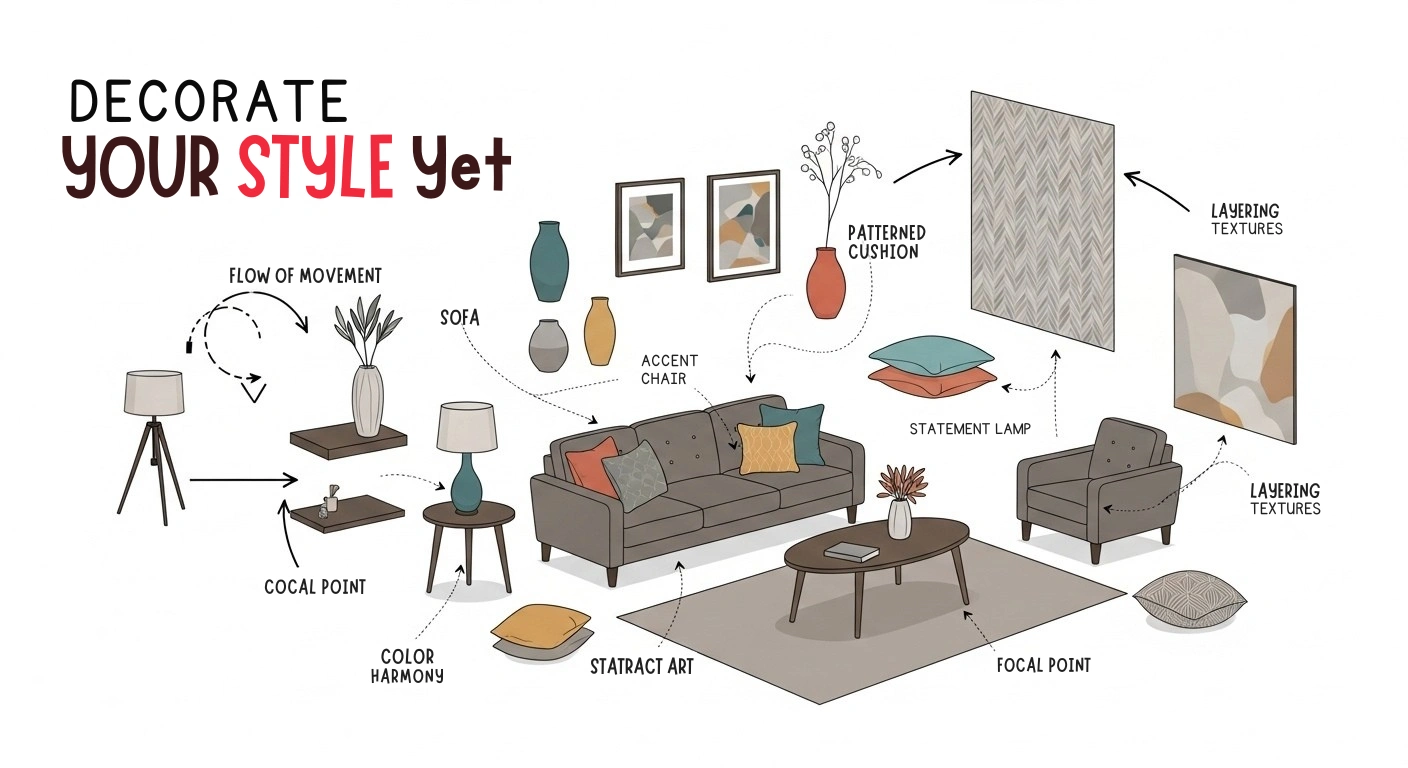
You want your home to look amazing, but every time you try to pick a direction, you freeze. One minute you love minimalism, the next you’re swooning over a colorful bohemian living room. Your Pinterest board looks like five different people made it, and nothing in your actual home feels “right.”
Relax. Not knowing your style isn’t a flaw it’s the starting point. Most people with gorgeous homes didn’t figure it out overnight. They stumbled, experimented, and slowly discovered what felt like them. Will walk you through how to decorate when you don’t know your style yet, step by step, without the overwhelm.
Why It’s Normal to Feel Stuck
The pressure to have a “defined aesthetic” is honestly a modern invention. Your grandparents never stressed about whether their living room was mid-century modern or transitional. They just bought things they liked.
Today, social media throws thousands of beautiful rooms at you daily. You love all of them, so you can’t commit to any of them. That’s not confusion — that’s broad taste, and it’s actually a strength once you learn how to channel it.
Start With Feelings, Not Furniture
Before picking a single piece of decor, ask yourself: how do I want to feel when I walk into my home? Calm? Energized? Cozy? Sophisticated?
Write down three to five feeling words. Words like “airy,” “warm,” “vibrant,” or “grounded” work perfectly. These become your filter for every decision. When you’re debating whether that bold red rug belongs, check it against your feeling words. If your words are “calm and peaceful,” that rug probably isn’t the one.
Your Closet Already Knows Your Style
This sounds odd, but your wardrobe reveals more about your taste than you think. Go look at what you wear most:
- Mostly neutrals (black, white, gray) — you likely lean toward modern, minimalist, or Scandinavian interiors.
- Bold prints and bright colors — bohemian or eclectic decor probably speaks to you.
- Classic, tailored pieces — traditional or transitional design might be your thing.
- Earthy tones and relaxed textures — farmhouse or coastal vibes could be calling your name.
Your clothing choices offer honest clues about the textures, colors, and visual weight you naturally gravitate toward.
Pay Attention to Real Spaces, Not Just Photos
Every guide tells you to scroll Pinterest. That’s fine but real-life spaces teach you way more than flat images on a screen.
When you walk into a coffee shop, hotel lobby, restaurant, or friend’s house and think “I love this vibe,” pause for ten seconds and ask why. Is it the warm lighting? The exposed brick? The clean lines? Snap a quick photo on your phone.
Travel is an incredible style teacher too. A weekend trip might introduce you to Mediterranean tile work, Japanese minimalism, or the cozy layered look of a mountain cabin. These real-world experiences plant seeds in your taste that photos simply can’t replicate.
Build a Ruthless Inspiration Folder
Now go ahead and make that Pinterest board but with one strict rule. Only save images that give you an immediate emotional reaction. Not “that’s pretty.” More like “I want to live there right now.”
After collecting 20 to 30 images over a few weeks, sit down and look for patterns. You’ll likely notice surprising themes maybe warm wood tones keep appearing, or every room has plants, or you’re consistently drawn to white walls with colorful accents. Those patterns are your style DNA showing itself.
| Style | Key Features | Color Palette | Best If You Want to Feel… |
|---|---|---|---|
| Modern Minimalist | Clean lines, uncluttered, functional | Whites, blacks, grays | Calm and focused |
| Scandinavian | Light woods, cozy textiles, natural light | Whites, creams, pale blues | Airy and warm |
| Bohemian | Layered textures, eclectic mix, global influence | Jewel tones, earthy shades | Creative and free |
| Mid-Century Modern | Retro shapes, organic curves, mixed materials | Mustard, olive, teal, warm brown | Stylish and nostalgic |
| Modern Farmhouse | Natural materials, simple elegance, shiplap | Whites, soft grays, natural wood | Grounded and homey |
| Coastal | Breezy fabrics, nautical touches, airy layout | Blues, whites, sandy neutrals | Relaxed and light |
| Transitional | Traditional warmth meets modern simplicity | Neutrals, soft blues, warm taupe | Balanced and timeless |
| Industrial | Exposed materials, metal, raw textures | Charcoal, rust, black, concrete | Urban and edgy |
Don’t stress about fitting perfectly into one. Most real homes blend two or three styles together, and that blend is your personal style.
Work With Your Home Bones
This is the step most guides skip entirely. Every home has fixed elements flooring, countertops, tile, trim, ceiling height, and architectural character. These aren’t obstacles. They’re clues.
If your home décor has craftsman woodwork, warm transitional decor will feel natural. If your apartment has concrete floors and exposed ductwork, industrial or modern style is practically built in. If you’ve got arched doorways and terra-cotta tile, Mediterranean-inspired decor will flow effortlessly.
Fighting your home’s natural character creates a tension you’ll feel but can’t quite name. Instead, list your fixed elements and ask: what styles would complement these rather than compete with them? This is especially powerful for renters dealing with finishes they didn’t choose.
| Priority | Focus On | Why | Budget Tip |
|---|---|---|---|
| First | Wall color, large furniture (sofa, bed, table) | Sets the entire room’s tone | Keep big pieces neutral for flexibility |
| Second | Rugs, curtains, major lighting | Defines warmth, scale, and mood | Worth investing a bit more here |
| Third | Art, pillows, plants, decorative objects | Where your personality really shows | Thrift stores and flea markets are goldmines |
| Fourth | Candles, trays, small accents | Makes a room feel finished | Rotate seasonally as your taste evolves |
That perfectly styled living room you’re envying online? It probably took years to put together. You’re looking at someone’s finished product and comparing it to your starting point. That’s never going to be a fair comparison.
Decorating is a process, not a weekend event. The most beautiful homes are the ones that were built slowly, piece by piece. Give yourself that same grace.
FAQs
How long does it take to find your decorating style?
There’s no fixed timeline. Some people feel confident within a few months of paying attention. Others take a year or more. The key is treating it as an ongoing discovery, not a problem to solve overnight.
Can I like more than one style?
Absolutely. Most people are a blend of two or three styles. Keep your color palette consistent across the room, and different style elements will look intentional rather than random.
What’s the biggest decorating mistake beginners make?
Buying everything at once from the same store. It creates a showroom look, not a lived-in home. Rooms develop character when pieces come from different places and price points.
How do I decorate on a tight budget without knowing my style?
Start by rearranging what you already own. Hit thrift stores for affordable experiments. Keep big-ticket items neutral so they’ll work no matter how your taste evolves, and save personality spending for small, swappable accessories.
What if I decorate and then completely change my mind?
That’s not failure that’s growth. Build a flexible foundation with neutral basics, and when your taste shifts, you’ll only need to update the accent pieces, not the whole room.
Final Thought
Figuring out how to decorate when you don’t know your style yet is less about finding the “right answer” and more about learning to trust yourself. Pay attention to what makes you feel good, start small, experiment freely, and let your home grow with you over time. Your style is already in there it just needs a little room to breathe.