
Small Modern Kitchen Design Ideas to Maximize Space and Style

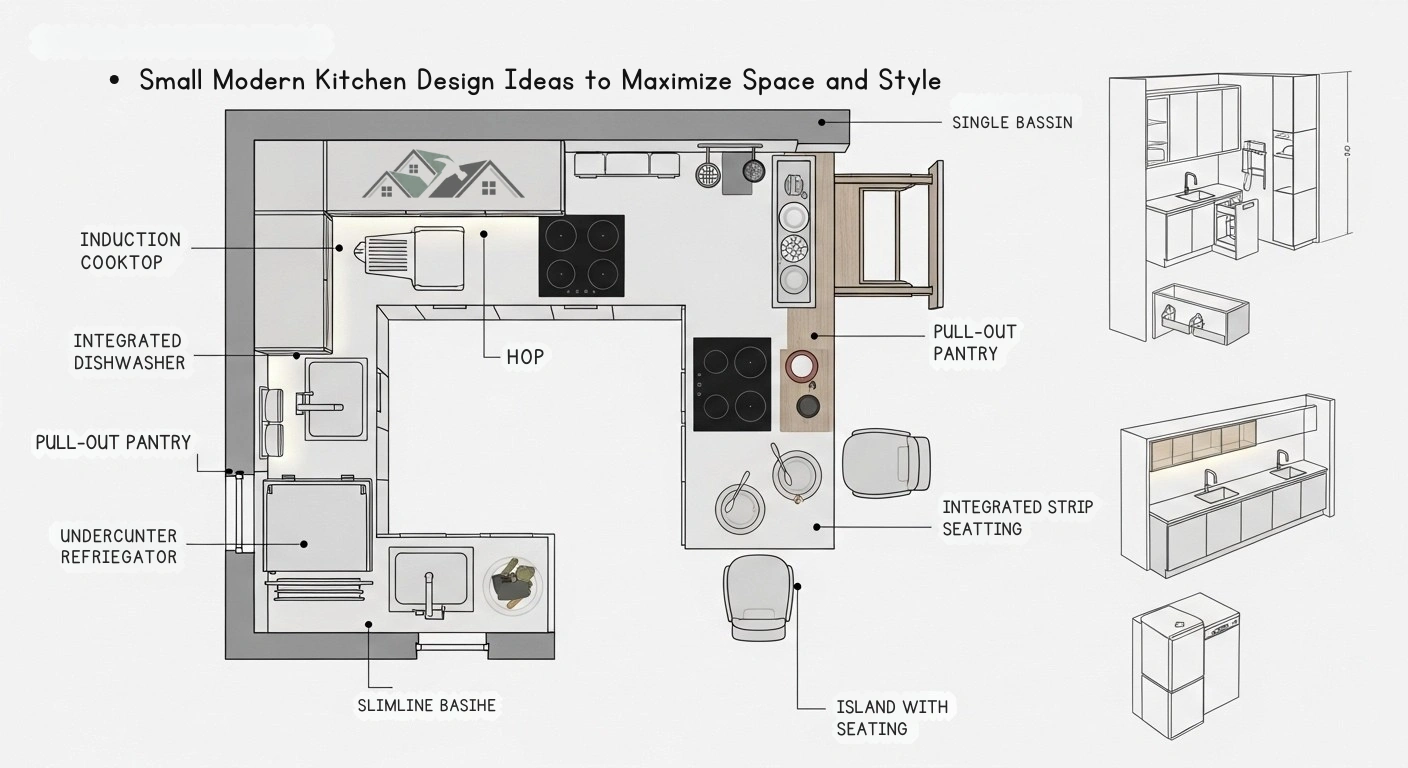
A small kitchen design doesn’t have to feel like a compromise. With smart planning and a few modern tricks, even the tiniest cooking space can look stylish and work like a dream. Whether you’re renting an apartment or remodeling an older home, the right ideas turn limited square footage into something you’ll genuinely love using every day.
This guide covers everything layouts, storage, colors, flooring, lighting, ventilation, tech, and budget tips so you can pick what works for your space and start making changes today.
Pick a Layout That Actually Works
Your layout is the backbone of your kitchen. Get this wrong and nothing else matters.
- Galley: Two parallel counters with a walkway. Best for narrow rooms where you want everything within arm’s reach.
- L-Shaped: Cabinets along two adjoining walls, leaving the center open. Great for open-plan homes.
- Single-Wall: Everything on one wall. Ultra-minimal, perfect for studios and lofts.
- Peninsula: Like an island attached to a wall. Gives you extra counter space without needing full clearance around it.
| Layout | Best For | Biggest Advantage |
|---|---|---|
| Galley | Narrow apartments | Maximum efficiency |
| L-Shaped | Corner rooms, open plans | Frees the center of the room |
| Single-Wall | Studios, tiny spaces | Sleek and opens the room |
| Peninsula | Medium-small kitchens | Island benefits, less space needed |
Get Serious About Storage
Storage is the biggest challenge in any small kitchen. These ideas make every inch count.
- Floor-to-ceiling cabinets draw the eye upward and add a full extra tier of storage for rarely used items.
- Drawers instead of shelves in base cabinets let you see everything at a glance no more digging into dark corners.
- Pull-out pantry systems fit into narrow gaps beside the fridge or oven and slide out fully from both sides.
- Wall-mounted rails and magnetic strips keep knives, utensils, and pots off the counter and within grabbing distance.
- A small shelf above the sink turns blank wall space into a handy spot for soap, sponges, or a tiny herb pot.
- Lazy Susans and pull-out corner units rescue the dead space inside corner cabinets.
Choose a Design Style That Fits You
A small kitchen should still reflect your personality. Here are styles that work beautifully in compact spaces.
Modern minimalist thrives on clean lines, handle-free cabinets, and a single material palette like white and light wood. Modern farmhouse brings warmth through painted cabinets, open shelves, and natural wood countertops. Mid-century modern mixes retro charm with slim hardware and geometric tile backsplashes. Cottage core layers vintage-inspired details like ceramic dishes and woven baskets. And for drama lovers, dark and moody kitchens in charcoal or deep navy feel intimate and cozy when paired with warm lighting.
Use Color and Materials Strategically
Light colors like white, cream, and pale gray reflect light and make walls feel farther away. But you don’t have to go all white.
- Two-tone cabinets (light on top, dark on bottom) add depth without closing things in.
- Color drenching painting walls, ceiling, and cabinets the same shade blurs room boundaries and feels surprisingly spacious.
- Matching wall color in connected rooms makes the entire space read as one large area.
- Natural wood (light oak, birch) adds warmth and texture without visual clutter.
- Glossy finishes, mirrored backsplashes, and metallic hardware bounce light around and create the illusion of extra space.
Maximize Natural Light
Natural light makes any small kitchen feel twice its size. Don’t block it.
Switch heavy curtains for café curtains that cover only the lower half of the window. Remove upper cabinets from the wall facing your window and replace them with floating shelves. If your kitchen has no windows, place a mirror opposite a doorway or light source to bounce brightness around the room.
Layer Your Lighting
Good artificial lighting is just as important as natural light.
- Ambient: Recessed ceiling lights or flush-mount fixtures for overall brightness without eating headroom.
- Task: Under-cabinet LED strips to illuminate countertops where you actually work.
- Accent: A single pendant over a breakfast bar, puck lights inside drawers, or an illuminated glass cabinet for personality.
Skip bulky hanging fixtures in low-ceiling kitchens. Surface-mounted options keep things feeling open.
Pick the Right Flooring
Your floor can quietly expand or shrink how the room feels.
- Large-format tiles (12×24 or bigger) create fewer grout lines and a more continuous surface, which tricks the eye into seeing more space.
- Diagonal or herringbone patterns draw the eye outward and elongate the room.
- Light-colored flooring in pale gray or warm beige reflects light and amplifies brightness.
- Same flooring into adjacent rooms removes visual boundaries and makes everything feel unified.
Avoid busy multi-color tile patterns they create noise that makes the space feel smaller.
Don’t Ignore Ventilation
Small kitchens trap smoke, steam, and cooking odors fast. Without proper airflow, grease builds up quicker and moisture can lead to mold.
- Downdraft systems pull air downward behind the cooktop low-profile and nearly invisible.
- Induction cooktops with built-in ventilation extract air through the cooking surface, eliminating the need for an overhead hood entirely.
- Recirculating hoods with carbon filters work in apartments where ductwork isn’t an option.
- Open a window while cooking. Simple, free, and surprisingly effective.
Make a Small Island Work
You don’t need a huge kitchen for an island just a smarter one.
A rolling cart gives you extra prep space when cooking and tucks away when you’re done. A slim stationary island with storage underneath works if you’ve got a few extra feet. A fold-down wall table disappears completely when not needed. And if your kitchen opens into a living area, try placing a breakfast bar just outside the kitchen boundary to shift seating into the larger room.
Pro tip: tuck your microwave inside the island to free up counter space.
FAQs
What layout works best for very small kitchens?
Galley and single-wall layouts are the most space-efficient. L-shaped works well if your kitchen sits in a corner, and a peninsula gives you island-like function without needing full clearance.
How do I make my small kitchen look bigger without renovating?
Light paint, reflective surfaces, café curtains, under-cabinet LEDs, open shelving on one wall, and decluttered countertops all make a dramatic difference without any construction.
Can I have a kitchen island in a small space?
Yes rolling carts, slim islands, fold-down tables, and peninsulas all work. Keep it under 10% of your floor space and leave 36–42 inches of clearance around it.
What colors are trending for small kitchens in 2026?
Warm neutrals, two-tone cabinets, sage green, dusty blue, natural wood tones, and the color-drenching technique where walls, ceiling, and cabinets share one shade.
What flooring makes a small kitchen look bigger?
Large-format tiles in light colors with minimal grout lines. Diagonal or herringbone patterns elongate the space, and matching flooring into adjacent rooms removes visual boundaries.
How do I ventilate a small kitchen without a big range hood?
Downdraft systems, induction cooktops with integrated ventilation, recirculating hoods with carbon filters, or simply opening a window while you cook.
Final Thought
Small kitchens aren’t a limitation they’re a challenge that brings out the best design thinking. Every decision matters more, every detail shows, and every clever solution pays off in daily comfort. Start with one or two changes that excite you, build from there, and trust that a well-designed small kitchen can outperform and outshine spaces three times its size. The best kitchens aren’t the biggest ones. They’re the ones that work hardest for the people who use them.