
Top Kitchen Design Trends to Inspire You in 2026

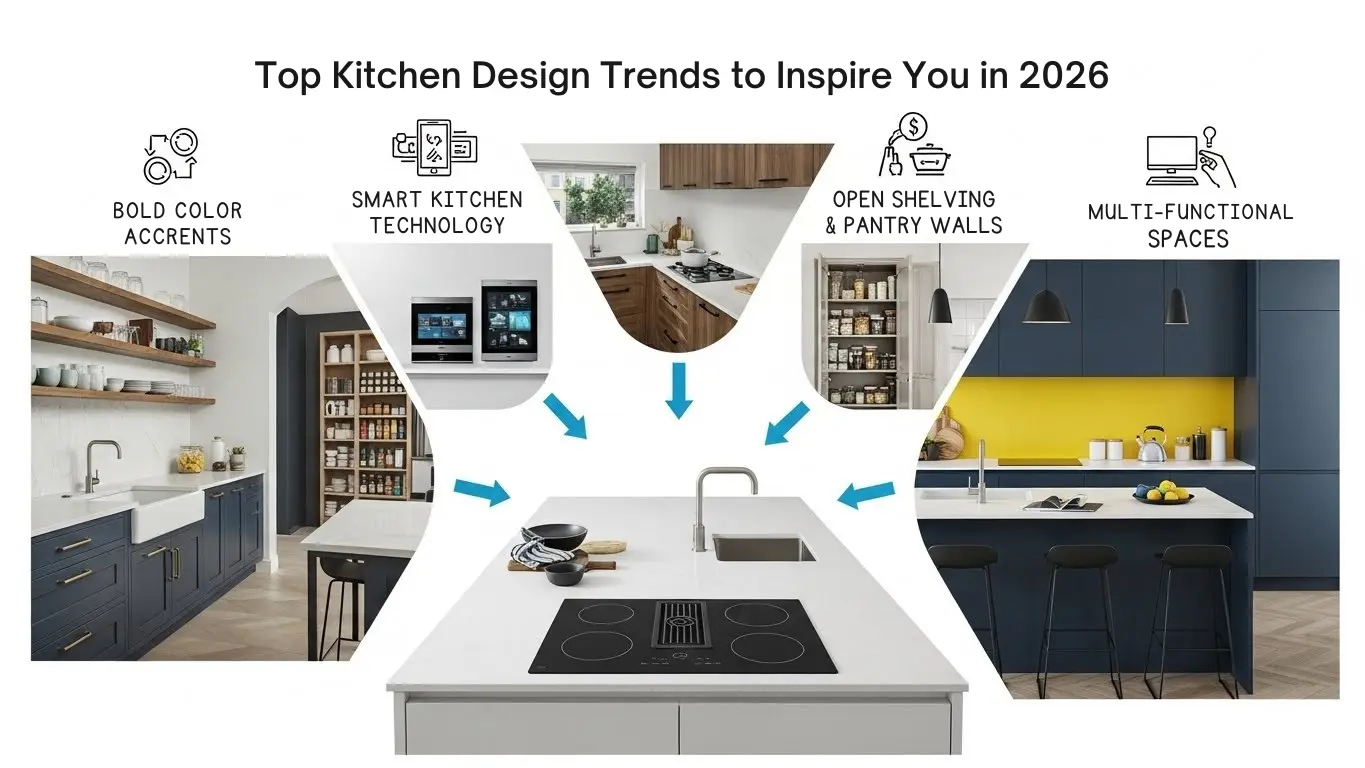
Top kitchen design trends for 2026 emphasize multifunctional, sustainable, and personalized spaces blending aesthetics with functionality. Key trends include smart technology integration, a focus on natural materials, earthy color palettes, bold colors, textured finishes, and eco-friendly materials.
If the last decade of kitchen design was defined by the “stark white laboratory” aesthetic, 2026 marks the official return of the hearth. But this isn’t a return to the past. The kitchen of the near future is a paradox: it looks more ancient and organic than ever, yet it hides technology so advanced it feels like magic.
Based on industry reports, emerging material science, and predictive design analytics, here are the top trends that will define kitchen spaces in 2026.
The Palette Shift “Universal Khaki” & The Death of Gray
The reign of cool gray is officially over. 2026 is ushering in an era of “Quiet Luxury” defined by warmth, wrapping the kitchen in colors that feel grounded and organic.
- The New Neutrals: Expect to see a massive shift toward “muddy” neutrals. Sherwin-Williams’ Universal Khaki and Benjamin Moore’s Silhouette AF-655 (a sultry, deep charcoal-brown) are leading this charge. These aren’t flat colors; they are complex hues that change with the light.
- Color Drenching: Designers are moving away from the “accent wall.” The trend for 2026 is color drenching painting cabinets, walls, and even ceilings in the same rich tone (like deep burgundy, sage green, or chocolate brown) to create a cozy, immersive “jewel box” effect.
- Wabi-Sabi Influence: The Japanese philosophy of finding beauty in imperfection continues to rise. Expect finishes that celebrate wear unlacquered brass that patinas over time and limewash paints that add chalky, hand-applied texture to walls.
Material Innovation Mycelium & The “Living” Kitchen
Sustainability is shifting from a buzzword to a visible design feature. In 2026, bio-design moves from the lab to the countertop.
- Mycelium Composites: One of the most exciting innovations is the use of mycelium (mushroom root structure) to create acoustic panels, light fixtures, and even cabinetry cores. These materials are fire-resistant, biodegradable, and offer a soft, suede-like texture that synthetic materials can’t match.
- Texture Over Shine: High-gloss lacquer is being replaced by matte and honed finishes. Fluted wood cabinetry (white oak and walnut) adds rhythm and shadow to the room, while Zellige tiles (handmade Moroccan clay tiles) provide an irregular, shimmering backsplash that breaks up rigid lines.
The “Invisible” Tech Revolution
The most futuristic trend of 2026 is that technology is disappearing completely. We are moving from “smart” devices with flashing screens to “calm” technology that is there only when you need it.
- Invisible Induction: Imagine a stone countertop that you can chop vegetables on, and then with the press of a button boil water directly on the surface. Technologies like TPB Tech and Novy Undercover are placing induction coils beneath sintered stone slabs. There are no defined burners; the counter is the cooktop.
- Projection Interfaces: Instead of a tablet taking up counter space, 2026 kitchens will utilize projection touchscreens. Smart projectors mounted under cabinets will turn your countertop into an interactive display for recipes or video calls, which then vanishes completely when you’re done cooking.
Layouts The Rise of the “Back Kitchen”
Open-concept living is great for socializing but terrible for hiding dirty dishes. The 2026 solution? The Scullery (or “Back Kitchen”).
- The Dirty Kitchen: High-end renovations are increasingly splitting the kitchen in two. The “front kitchen” features a stunning, sculptural island (often curved to encourage conversation) and hidden appliances. The “back kitchen” is a utilitarian pantry where the messy prep work, coffee stations, and dirty dish stacking happen behind closed doors.
- The Social Island: With prep moved to the back, the main kitchen island is evolving into furniture. Look for islands on legs (rather than solid blocks) to make the space feel airier, and curved edges that soften the room’s flow and prevent hip-bruising corners.
Sustainability 2.0 High Tech Waste Management
Composting is no longer just for gardeners; it’s becoming a seamless part of the luxury appliance suite.
- The “Appliance-ized” Compost: Devices like Mill and Reencle are redefining waste. These aren’t smelly buckets; they are smart, under-counter or standalone units that grind and dehydrate food scraps overnight, turning them into odorless, shelf-stable grounds (or “food grounds”) that can be mailed back for chicken feed or used in gardens.
- Septic-Safe Disposals: Innovations like Sepura are bridging the gap between a garbage disposal and a compost bin. This under-sink tech separates solids from liquids before they hit your pipes, storing the solids in a sealed, odor-proof bin for easy composting while sending only water down the drain.
The 2026 Kitchen at a Glance
| Trend Category | OUT (Fading Fast) | IN (Trending for 2026) |
| Color | Cool Grays & Stark Whites | Warm Khaki, Chocolate Brown, Sage |
| Surfaces | High-Gloss Quartz | Honed Stone, Sintered Stone, Fluted Wood |
| Tech | Large Touchscreens on Fridges | Invisible Induction, Projection Interfaces |
| Layout | One Giant Room | “Back Kitchens” & Sculleries |
| Waste | Standard Garbage Disposal | Integrated Dehydrators (Mill/Reencle) |
The End
The kitchen of 2026 is designed to feel less like a machine for cooking and more like a living room where food happens to be made. It prioritizes emotional warmth through texture and color, while using invisible technology to handle the “work” quietly in the background.